


Bradley Walsh’s game show hoax is a blistering indictment of the gambling industry
Bradley Walsh’s game show hoax is a blistering indictment of the gambling industry

Michael HoganSun, November 1, 2026 at 10:00 PM UTC
0
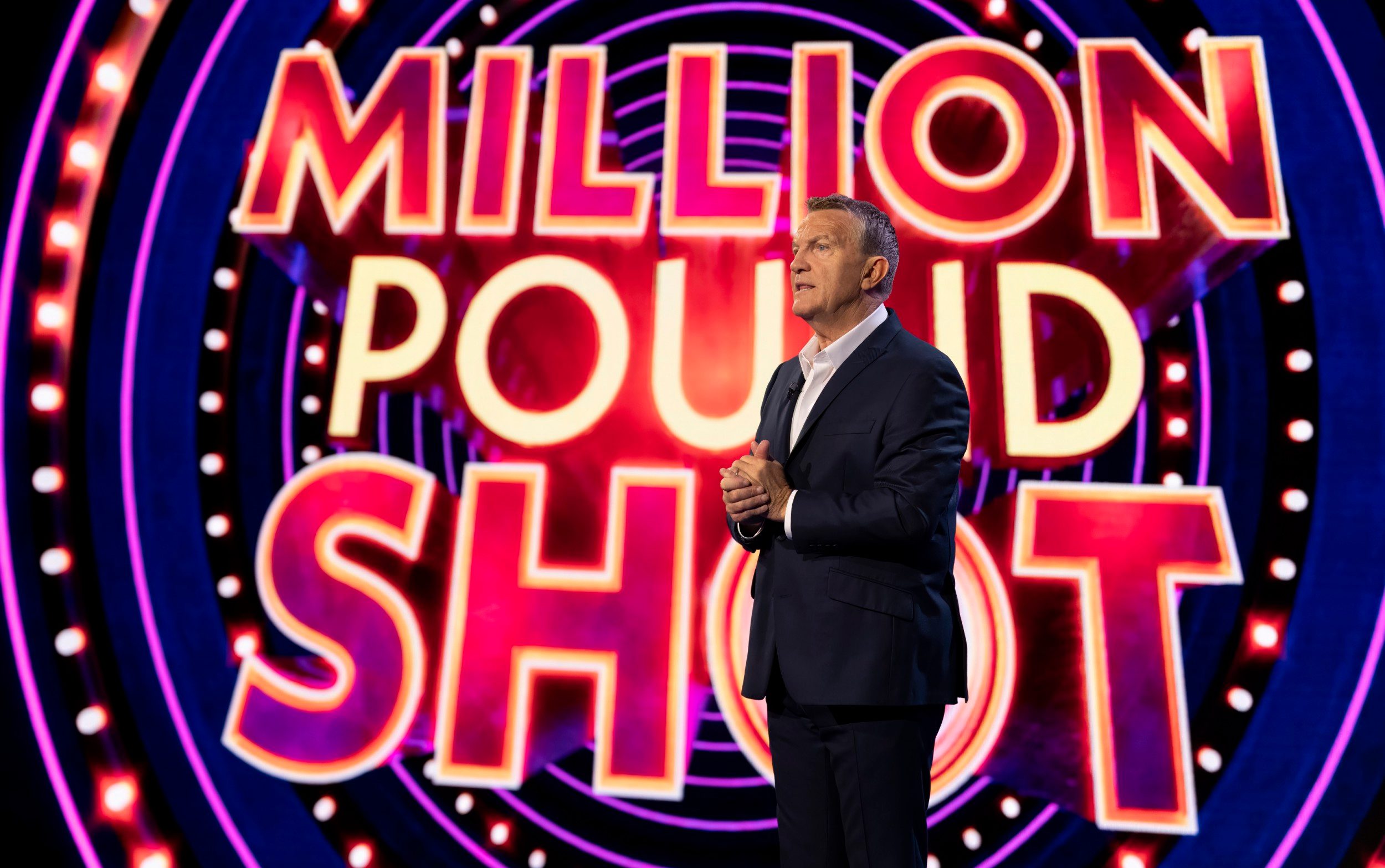
Bradley Walsh’s Million Pound Shot game show turned into a documentary about gambling - Channel 4/Gary Moyes
Bradley Walsh’s Million Pound Shot purported to be a new big-money game show. It was actually a blistering indictment of the gambling industry and the harm it does to society. This was no Ghostwatch, but it still made for a powerful hoax with worthy intent.
That infamous faux-investigation into paranormal activity aired on Hallowe’en 1992 and terrified the nation, fooling millions into believing it was real. The BBC received 30,000 calls from distressed viewers, and it caused such a furore that it was never screened again. On Saturday, a Channel 5 documentary explored its controversial legacy.
When Million Pound Shot suddenly appeared in the Channel 4 schedules, social media sleuths were soon on the case. Why broadcast it after the watershed? Why the night after Hallowe’en? How come it was made by a production company better known for stunt documentaries? According to the breathless blurb, this was no ordinary old game show; it was “a brand-new, one-off quiz event”. Talk of a “huge secret twist” and “a curveball you won’t see coming” only fuelled speculation.
So to the programme itself. In front of a live studio audience, three contestants competed for the chance to win a seven-figure jackpot. What set this format apart was that players risked their own hard-earned cash in pursuit of the life-changing prize, something that no previous UK quiz show had done. As host Walsh said, the punters had to “put your money where your mouth is”.
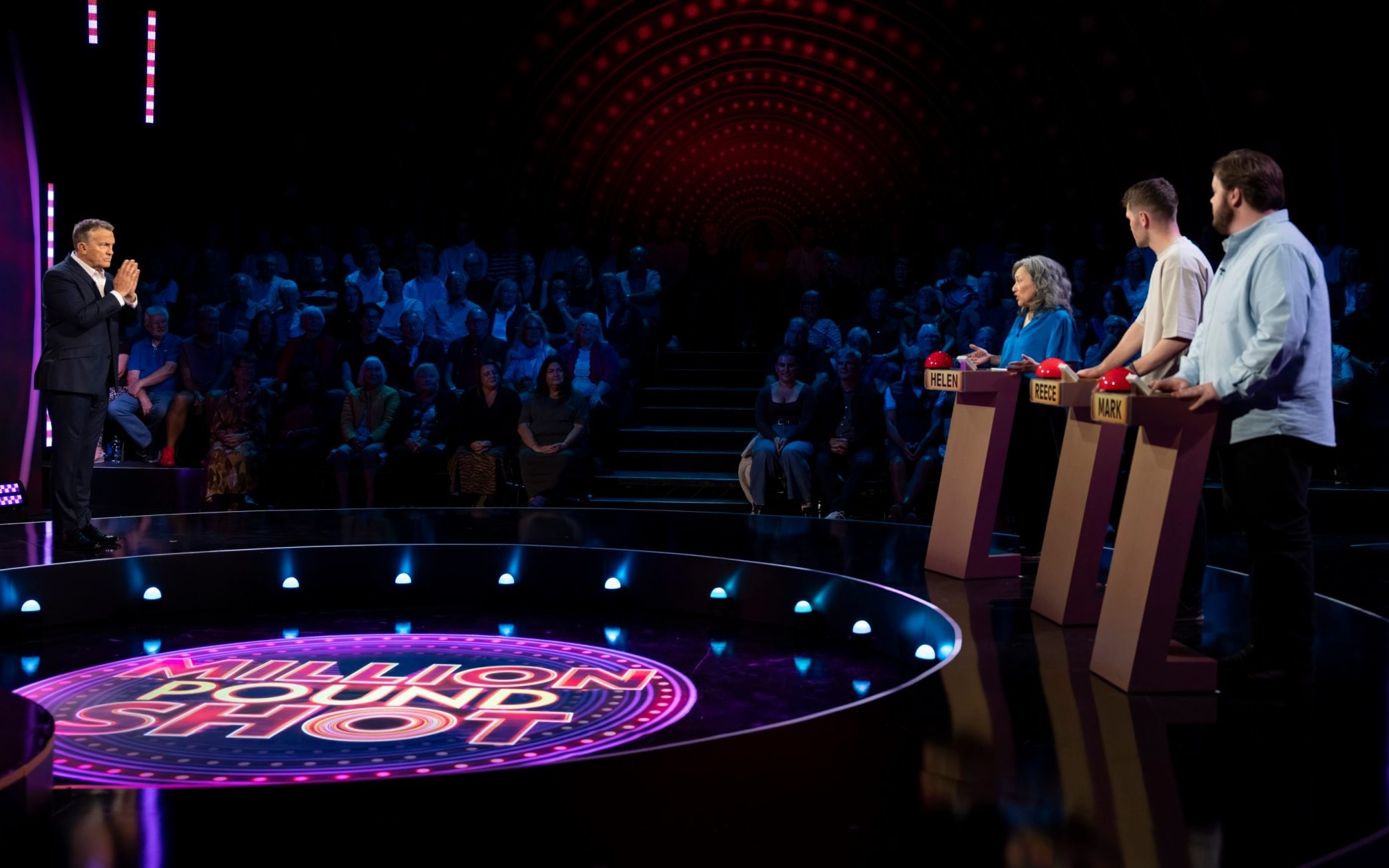
Three ‘contestants’ compete for the chance to win a seven-figure jackpot – using their own money - Channel 4/Gary Moyes
When Ghostwatch aired 34 years ago, audiences were less media-savvy and more gullible. Here the faked quiz didn’t quite convince. The set and graphics were blandly generic. The garbled format was like Wheel of Fortune meets Who Wants to Be a Millionaire?, except more impenetrable. Wobbly camerawork was a further clue that all wasn’t as it seemed.
Advertisement
Our plucky protagonist was Reece, a 30-year-old history teacher from Yorkshire. As his fortunes fluctuated, Walsh ratcheted up the tension. When Reece needed stake money, he entered his details into a card reader next to his buzzer. “Card out, Pin in!” became the queasy catchphrase. Increasingly desperate, Reece was soon down £6,000 of his own money. He fell to his knees, breathless with panic. A studio protester interrupted proceedings, heckling that this was “wrong” and “disgusting”. Other crowd members disagreed and a row broke out. Security guards intervened and the “show” was briefly taken off air.
Cue Walsh re-emerging to tell us: “What you just witnessed was a performance by actors. Everything you’ve seen tonight draws on techniques used by the gambling industry to manipulate its customers.” The second half of the show went behind the scenes to demonstrate how the spoof was made and explain the motivation.

‘What you just witnessed was a performance by actors’ - Channel 4/Gary Moyes
A psychologist and a campaigner for gambling reform joined Walsh to outline the tactics used: tokenising money, disguising losses as wins, giving the illusion of control. Examples were used from the Ladbrokes app and Coral adverts. Tricks deployed to stop Reece calling it quits included “free” bets to keep playing. It was, they said, “like offering an alcoholic a pint”.
We were told how half of the gambling sector’s profits come from just 5 per cent of its customers, addicts who are losing large sums. Lucky ones seek treatment. Others turn to crime or take their own lives. Billions are spent on advertising each year, inevitably seen by children as the industry grooms the next generation. There was a candid interview with Patrick, the case study on whom Reece was based. He had placed daily bets for 13 years. At his lowest ebb, Patrick had 76 different online accounts, was £300,000 in debt and planning to kill himself.
Sure, this wasn’t the most subtle piece of satire. It was akin to using a pneumatic drill to crack a nut. As well as Ghostwatch, it recalled Channel 4’s 2023 mockumentary The British Miracle Meat. However, the on-screen captions before the credits rolled were sobering: “Last year, the people of Britain lost £17.4bn gambling. One in every 14 suicides in the UK is connected to gambling. The gambling industry denies that any of its products cause social harm.” An eye-opening and admirably ambitious insight into a dangerous business.
Source: “AOL Entertainment”
