


New spending rules force lesser clubs to sell, sell, sell
New spending rules force lesser clubs to sell, sell, sell

Sam WallaceSun, September 6, 2026 at 8:40 AM UTC
0
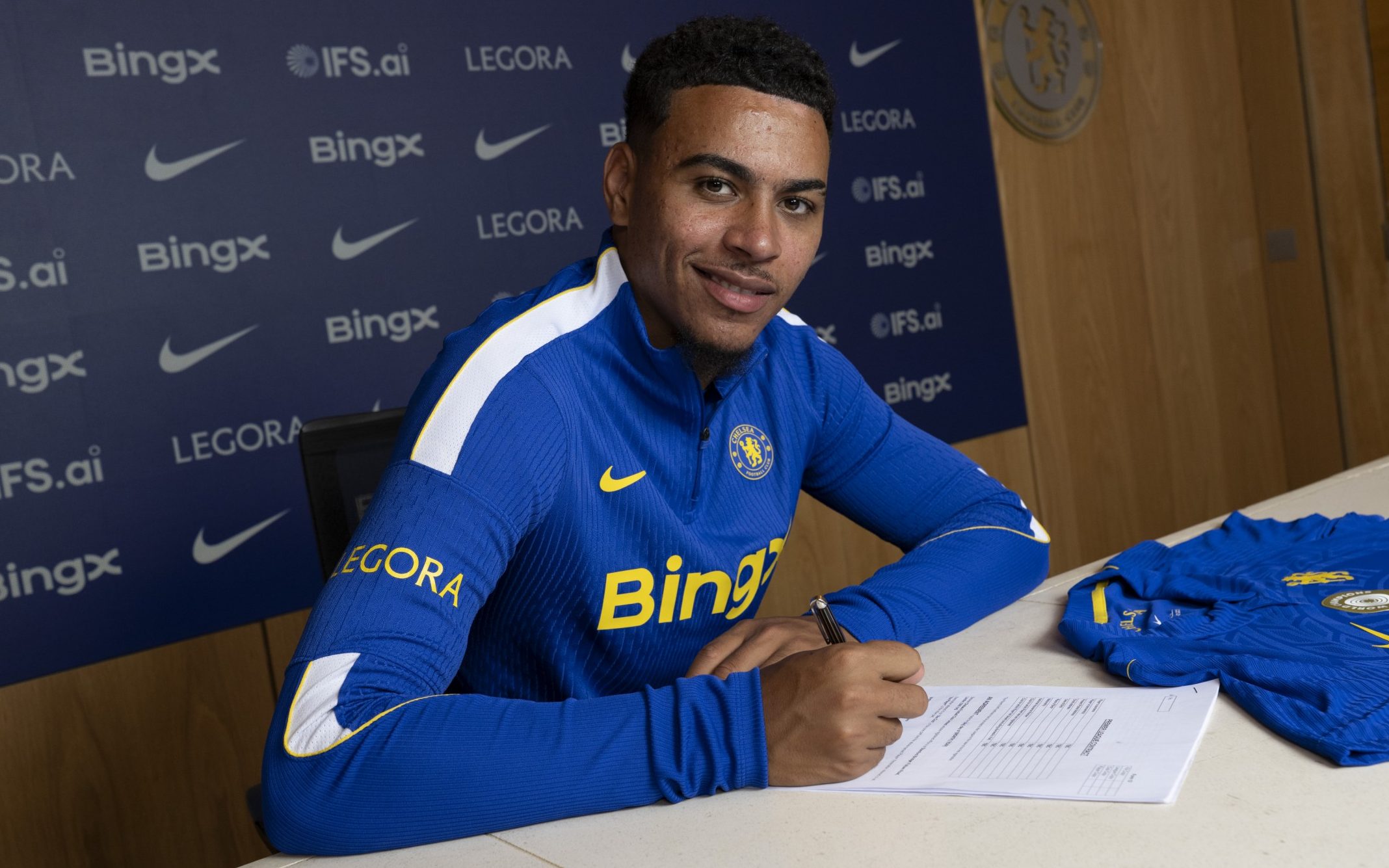
The sale of Morgan Rogers to Chelsea was part of a exodus from Aston Villa to help balance the club’s books to comply with financial regulations - Darren Walsh/Getty Images
The rules were championed by the Premier League’s biggest clubs to give them, of course, the supremacy in the transfer market they have always sought to maintain – although perhaps none could imagine the consequences.
This summer, in the great Premier League spending bubble, the new financial controls created in the image of Uefa’s remodelled system, are bearing their teeth. Squad cost ratio (SCR) voted into the Premier League’s rulebook in November by the minimum quorum of clubs – 14 – has established an entirely new trading dynamic for less wealthy clubs: sell, sell, sell.
For the upwardly mobile mid-ranking teams – with low revenue and relatively high costs on transfer fees and wages – the danger posed by SCR was obvious. It placed a limit on spending relative to revenue (85 per cent) that afforded them much less room to manoeuvre. In Uefa competitions, SCR is even tighter: just 70 per cent of turnover can be spent on fees, wages, bonuses, agents and all the associated costs.

Following Aston Villa’s Europa League triumph in 2026, Ollie Watkins was one of a raft of players to leave the club - Getty Images
It is that which has helped drive the frenzy this summer: £3.5bn spent in the window, and of that £1.6bn between Premier League clubs. SCR means that clubs who do not traditionally generate big revenues up around the £700m mark of the big six need to sell players to get their costs under SCR’s 85 per cent mark. For those who are also in Europe: Bournemouth, Brighton and Hove Albion, Crystal Palace and Aston Villa – operating under Uefa sanctions – the squeeze was even tighter.
SCR’s annual scramble
A successful Premier League needs good regulation. That means acknowledging competition must be fierce on matchday, as well as accepting that history dictates some beasts are just bigger than others. The financial controls that calibrate it must give hope to those who wish to invest at all levels. Yet without giving them so much scope to do so that the balance is ruined forever by the power of sovereign wealth funds, or boundless private equity investment.
SCR asks a lot of questions of a club’s finances, but it is hard not to think that ultimately it makes it easier for the wealthiest to buy players at clubs lower down the food chain.
SCR dictates that transfer profit is split in three and assigned accordingly over three financial years. On the other side, transfer fees payable are amortised equally over contract lengths. A sale combined with an acquisition of around the same value makes a positive contribution to reducing costs and brings a club closer to complying with the spending ratio. It has made the market very liquid indeed.
The previous model, profit and sustainability rules (PSR), allowed for a single big sale by a club to stay on the consideration for three years. Under that three-year rolling monitoring period, a club could make losses for two years and correct it in the third by making the necessary market profit. Now an annual scramble to get under the SCR limit means there is less time to correct transfer market mistakes.
Uefa regulations pile on pressure
Under Uefa the conditions are even more onerous. Unlike the Premier League rules, Uefa SCR runs on a calendar year and does not permit add-backs on cost for injured players. Among the Premier League’s low-revenue clubs in Uefa competitions there are those currently that, under former cost-control regimes, would have had significant headroom to invest this summer. Instead they have spent the last few weeks of the window chasing sales to get under the 70 per cent limit.
Advertisement
The likes of Palace and Bournemouth, both in Uefa competition this season, are just about on the cusp. Neither can take Premier League survival as a given, and you have to wonder how much damage Uefa’s 70 per cent ratio does to their domestic chances. Is a place in the less lucrative European competitions even worth the hassle?
In the end these clubs, as well as the likes of Fulham and Brentford, will have to trust their long-standing expertise in player trading to overcome yet another challenge. But it is not getting easier. Spotting value in the market and acquiring those targets becomes even harder when the biggest clubs are muscling into that tier of emergent players via their multi-club (MCO) partners.
The Premier League turned to SCR because many became convinced that once Uefa had adopted it, there was no other option. Why so many smaller clubs voted for it despite the disadvantages to them was not obvious at the time and is no clearer now. Prevalent then in some clubs’ thinking was the messy aftermath of the PSR cases against Everton and Nottingham Forest. Others may have feared an imminent PSR breach and would agree to anything that would buy more time to get their house in order.
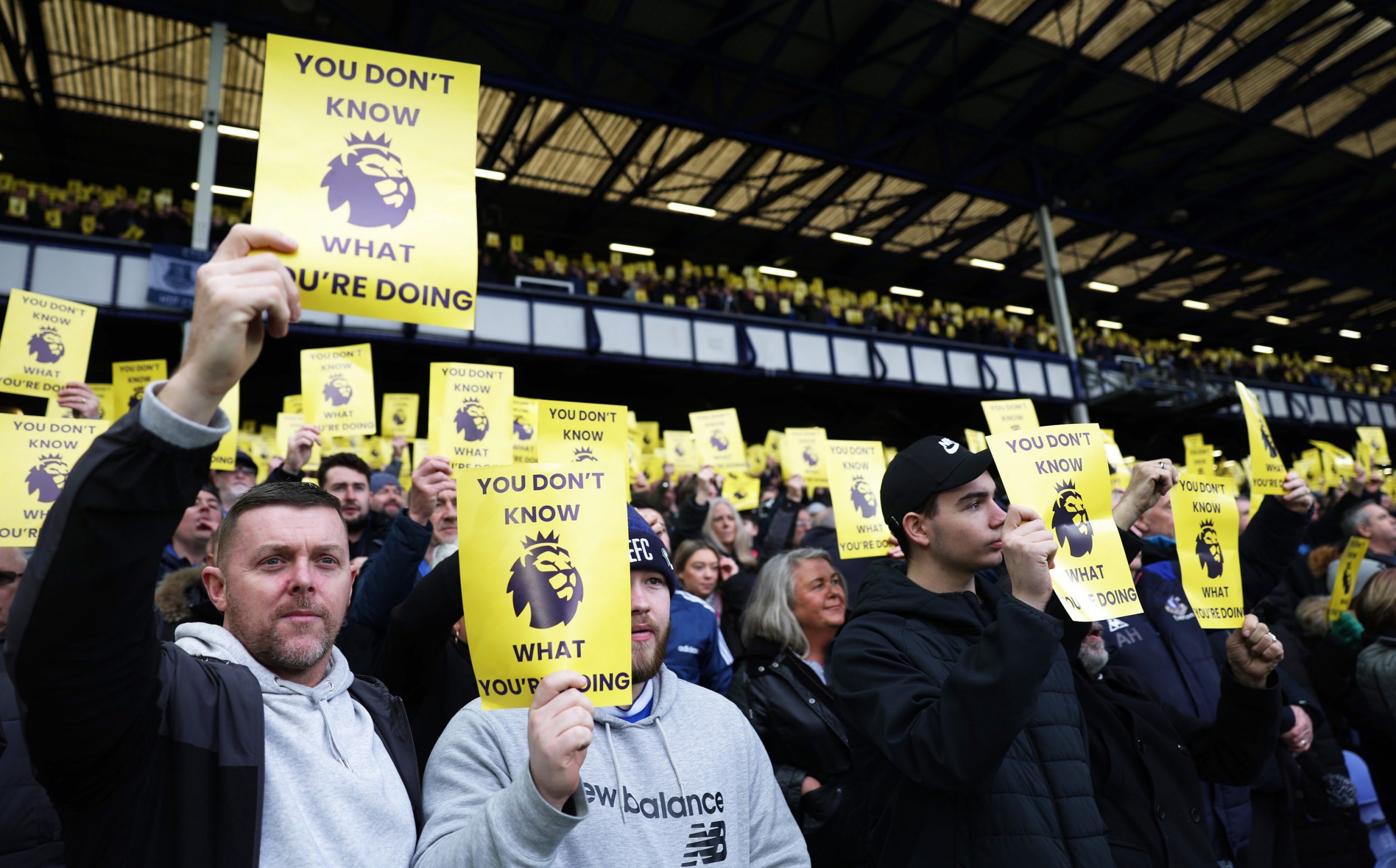
Everton fans have protested against the Premier League’s financial regulations in previous seasons following points deductions and fines - Clive Brunskill/Getty Images
There are no SCR fines in the Premier League in year one, but down the line breaches will attract a fine, redistributed to competitors. Which means, should Hull City or Coventry City for example breach SCR – and there is no suggestion they will – then part of the fines will find their way to the likes of Manchester United or Arsenal. It certainly will not be the league’s finest hour. SCR still has the scope for points deductions for longer-term, extreme breaches.
The Premier League executive argued in November, after previous failed attempts to pass SCR at vote, that real-time financial controls were needed. PSR took longer – three years – for a breach to emerge. In that time there were teams relegated and all the potential for acrimony and legal action.
Wealthy clubs have always bought players from more impecunious rivals – that is one of football’s oldest stories. Even so, the sheer number of trades this summer tells its own story. This is a model that forces the lesser lights to sell players, often their best players, in a way that was much less urgent under PSR. It can come as little surprise that a record percentage of sales – half – are peer-to-peer within the 20 Premier League clubs. The English market is the market. European leagues outside the big four of Paris St-Germain, Bayern Munich, Real Madrid and Barcelona do not have the budget to compete – and sometimes even those four too fall short.

Barcelona paid a premium in the summer window for Newcastle’s Anthony Gordon (C) and Man City’s Rodri (R) - Eric Alonso/Getty Images
The highest-volume traders, Chelsea, with a five-year net spend of around £1.2bn, have pushed a great deal of capital into the market. While Chelsea are not the only club to do so, this is a competition in which clubs are effectively extending credit to one another on instalment payments on transfer purchases. Supercharged by SCR, the selling spirals and, some might say, the bubble grows.
When it comes to SCR one only needs to look at those who voted against it: Brentford, Brighton, Palace, Bournemouth, Fulham and Leeds United. At the time it felt like the right side to be on and little has changed.
The biggest clubs knew that no-one could generate the revenue they can. At the same time they refused to accept the anchoring principle which would have limited total spending in any one year to just four and a half times the league’s disbursements to the lowest-placed club.
In the end, those big clubs won both ways. Controls that were harder for those with lesser revenue to comply with – and yet no top limit on spending. The consequences are there for all to see.
Source: “AOL Money”
