


Paul McCartney Deep Cuts: Why Don’t More People Know These Songs?
Paul McCartney Deep Cuts: Why Don’t More People Know These Songs?

Nick DeRiso Sat, September 5, 2026 at 1:36 PM UTC
0

©Gustavo Caballero, Getty Images / Apple / Capitol / Parlophone
Paul McCartney became a singles machine after the Beatles split. In fact, he’s released more solo songs than his three former bandmates combined. They only burnished his incredible career stats.
In all, McCartney has written or co-written a record 32 chart-topping Hot 100 singles. Seven of them were with Wings, his Beatles successor band, or as a solo artist. He also co-wrote No. 1 songs for Peter and Gordon, Elton John, Stars on 45, Michael Jackson and Stevie Wonder.
McCartney has likewise released more chart-toppers than any other act in the U.K., where he’s been part of 24 No. 1 singles – including two as a solo act and with Wings. “Ebony and Ivory,” with Wonder, topped the U.K. charts, too.
What Are Paul McCartney’s Best Deep Cuts?
He eventually became one of the rare acts to be inducted into the Rock & Roll Hall of Fame both with a band and as a solo artist. Singles certainly helped secure that legacy. But McCartney has also sold millions and millions and millions of albums.
He’s released nine platinum or multi-platinum studio LPs in the U.S. since leaving the Beatles. A similar number topped the album charts in the U.K. By 2020, he’d become the first act to place an album in one of the top two Billboard chart positions in each of the last six decades. So, there’s clearly more to McCartney’s storied career than best-selling singles.
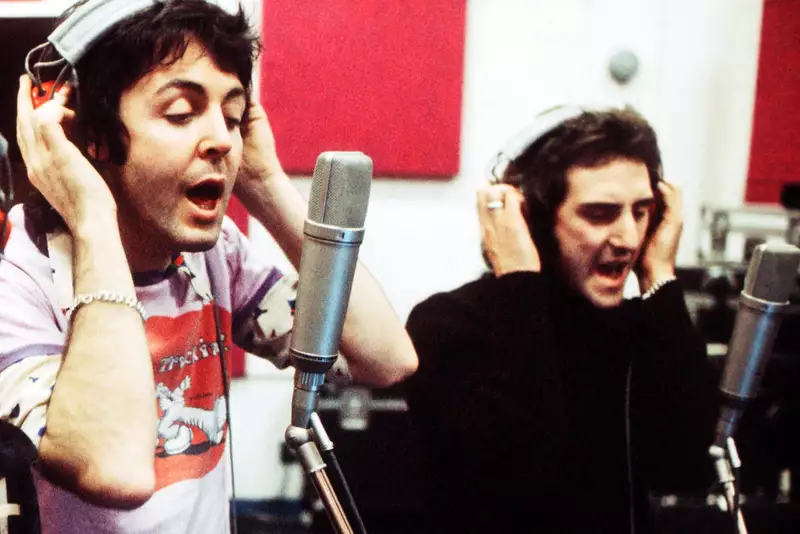
Deep cuts power those albums, connecting the more well-known songs while completing each era’s creative picture. In some cases, they’ve become fan favorites. But by definition a deep cut can never have been released as a single or B-side. They’re to be discovered while the album spins.
We’ve taken a look back at the best of them in the following countdown of Top 20 Paul McCartney Deep Cuts. Here’s how we ranked them:
No. 20. “Sweetest Little Show” From: Pipes of Peace (1983)
If Pipes of Peace sounds like Tug of War leftovers, that’s because it’s exactly what this was. McCartney called Michael Jackson back in for another duet, but “Say Say Say” came off as utterly facile after “The Girl Is Mine.” McCartney’s scattered attempts at modernizing his sound feel forced and became immediately dated. Even a collaboration with Ringo Starr (“So Bad”) falls flat. “Sweetest Little Show,” another of those held-over tracks, stands out because of its effortless, Wings-like exuberance. There’s a reason for that: It grew out of a July 1980 jam with the now-departed Denny Laine. Later, a fun interlude on guitar sparked this spontaneous round of applause from the assembled studio assistants, and McCartney left it in.
Subscribe to Ultimate Classic Rock on Youtube
No. 19. “Heart of the Country” (Ram, 1971)
If the opening song on Side Two of Ram sounds like it burst from an idyllic rural hillside, that’s because, well, it did. “Heart of the Country” celebrated the quiet life McCartney made for himself with Linda McCartney at High Peak Farm in Kintyre, Scotland, far away from the Fab Four mobs – and it did so in an appropriately simple way: McCartney only used six of the available 16 tracks at CBS Studios in New York, with future Wings co-founder Denny Seiwell playing a homemade drumkit constructed from a nearby plastic trashcan.
Subscribe to Ultimate Classic Rock on Youtube
No. 18. “Magneto and Titanium Man” (Venus and Mars, 1975)
Impish and ear-wormy, “Magneto and Titanium Man” finds McCartney happily inhabiting the Marvel Universe, decades before that was a thing. He’d nostalgically picked up a comic book on a whim during his regular Saturday trip to the market while on vacation in Jamaica – and then found himself hooked all over again. “It took some skill – not to mention perspective and imagination – to pull off these illustrations,” McCartney said in The Lyrics: 1956 to the Present. “So, I decided it would be nice to bring these two comic book characters into a song.”
Subscribe to Ultimate Classic Rock on Youtube
No. 17. “Momma Gets By” From: The Boys of Dudgeon Lane (2026)
While John Lennon told stories of deep personal import and George Harrison wrestled with eternity, McCartney often explored the small moments that make up nameless people’s lives. “Momma Gets By” is his best late-career example. It also reinforces a tandem idea: McCartney approaches it all with an open-hearted curiosity. As with the long-suffering wife of this song’s shiftless male protagonist, he loves them.
Subscribe to Ultimate Classic Rock on Youtube
READ MORE:Ranking Every Beatles Solo Album
No. 16. “That Would Be Something” (McCartney, 1970)
A groovy little lovestruck piffle, “That Would Be Something” is emblematic of this debut album’s general aesthetic. McCartney layers in every element, including the sung (not played) drum fills. Like a lot of McCartney, there also isn’t much going on lyrically with “That Would Be Something” – and yet it somehow charms. In this way, McCartney had inadvertently set something of a solo standard. (Check out the similarly nonsensical “Getting Closer,” Wings’ Top 20 hit from 1979.) Asked what a “pure McCartney song” might be during a 1986 BBC documentary, he demurred at first. Then McCartney admitted: “Something like ‘That Would Be Something,’ I think is very me.”
Subscribe to Ultimate Classic Rock on Youtube
No. 15. “Get On the Right Thing” (Red Rose Speedway, 1973)
Another Ram-era leftover, this track has Beatles-esque pretensions — and that gives “Get on the Right Thing” much of its continued resonance. There’s a lot to love here. McCartney sings in the style of his old Little Richard send-ups for one of the last times on an original song. His vocals ascend into a rattling fervor, then whoop and call all the way back down, while still tracing a chaptered compositional style that recalls the best moments from Abbey Road. “Get on the Right Thing” also rocks in a way that drive-by fans might never have guessed after wading through the gauzy web of strings on “My Love,” heard earlier on Red Rose Speedway.
Subscribe to Ultimate Classic Rock on Youtube
No. 14. “One of These Days” From: McCartney II (1980)
Perhaps unsurprisingly, one of the strongest tracks on this goofball experimental dud of an album finds McCartney at work with an acoustic guitar. Sure, he double tracks, and weirdly synthesizes, his voice but that’s the extent of the adornments to be found on the quietly effective “One of These Days.” “Quietly effective” may sound like a back-handed compliment. But in the ’80s, and on an LP that found McCartney focused so completely on at-home doodles with a new-fangled keyboard, that counts as high praise.
Subscribe to Ultimate Classic Rock on Youtube
No. 13. “Dominoes” From: Egypt Station (2018)
An endearing career travelogue, “Dominoes” finds McCartney once again reclaiming his own considerable legacy in the Beatles. He starts with a lithe acoustic riff that would have been at home on the White Album, then continues to flip through his back pages: There’s the crackling cadence of his ’80s albums, the enveloping background vocal style of his ’70s work, a backward guitar straight out of the ’60s. His lyric, about how one thing can unexpectedly lead to another, underscores this stirring musical journey. “Dominoes” then ends with a delicately conveyed, note-perfect line: “It’s been a blast.“
Subscribe to Ultimate Classic Rock on Youtube
READ MORE:Top 10 Beatles Guitar Solos Not By George Harrison
No. 12. “Big Barn Bed” (Red Rose Speedway, 1973)
On the earlier Ram, “Ram On” included a reprise that connects directly to the first song on Wings’ second album: “Who’s that coming round that corner? / Who’s that coming round that bend?” is also the opening line of “Big Barn Bed.” In fact, this track’s history goes back even further. Yet “Big Barn Bed” is another example, and perhaps the best one, of how McCartney could put everything he had into a song – except a proper conclusion. Thankfully, the first half of this is so perfect, so joyous and loved filled, that it carries Wings past another jumbled ending.
Subscribe to Ultimate Classic Rock on Youtube
Advertisement
No. 11. “Dear Friend” (Wild Life, 1971)
Often thought of as a response to Lennon’s Imagine-era sniping, “Dear Friend” actually dated to the sessions for Ram – well before the acid-tongued “How Do You Sleep?” hit store shelves. McCartney is reaching across the divide, but in a haltingly conciliatory way: This moody, minor-keyed rumination begins with four unanswered questions, underscoring his sad confusion. Those turbulent, well-placed fills from drummer Denny Seiwell, a cornerstone of Wings’ first incarnation, only add to the drama. Richard Hewson’s strings arrive with a crescendo, like a heart breaking.
Subscribe to Ultimate Classic Rock on Youtube
No. 10. “To You” (Back to the Egg, 1979)
A blast of new-wave inventiveness, “To You” finds McCartney employing these Ric Ocasek-type hiccups and post-punk howls, while guitarist Laurence Juber furiously saws away over a fidgety beat – then, in a moment of smeared brilliance, runs his guitar through an Eventide harmonizer to complete these totally wackadoo solos. Nowhere else on Back to the Egg is there a greater sense of the fizzy future that never was for the final lineup of Wings. In a few years, of course, this sound would be airing wall-to-wall on MTV.
Subscribe to Ultimate Classic Rock on Youtube
No. 9. “The Song We Were Singing” From: Flaming Pie (1997)
Work on the Beatles’ Anthology series clearly had McCartney in a nostalgic mood. The first song attempted for Flaming Pie puts McCartney back together John Lennon at the peak of their friendship and musical collaborations. “The song represents for me good memories of the ’60s, of dossing around late at night, chatting, smoking, drinking wine, hanging out, jawing through the night,” McCartney later remembered. “I think it works as an opening track – it creeps you into the album and sets it up nicely.”
Subscribe to Ultimate Classic Rock on Youtube
READ MORE:See Where Paul McCartney Ranks Among Beatles Live Albums
No. 8. “Nineteen Hundred and Eighty-Five” From: Band on the Run (1973)
McCartney sometimes was inspired to complete a song after coming up with its very first line. Other times, as with “Nineteen Hundred and Eighty-Five,” that first line became a stumbling block. He ruminated for months on the final track from Band on the Run, never getting past its opening statement. The long-awaited completed version is driven toward a stratospheric vocal bridge by McCartney’s insistent piano, then somehow builds to an almost impossible finale before crash landing into the title song’s theme.
Subscribe to Ultimate Classic Rock on Youtube
No. 7. “Jenny Wren” From: Chaos and Creation in the Backyard (2005)
This Grammy-nominated track recalls the finger-picking triumphs of “Blackbird” and “Calico Skies,” allowing McCartney to explore his still-strong upper range on a lyric born of nature. Seems he found himself with a guitar overlooking this picturesque canyon scene. McCartney made an interesting sound, then recalled a character from Charles Dickens – one who shared the name of his favorite bird, a tiny, quite shy species – and allowed the instrument to guide him the rest of the way. “Jenny Wren” was completed later with the addition of an Armenian woodwind called a duduk.
Subscribe to Ultimate Classic Rock on Youtube
No. 6. “Little Lamb Dragonfly” (Red Rose Speedway, 1973)
Though included on Wings’ second album, this song’s history is given away in the personnel credits.Ram-era guitarist Hugh McCracken appears with the McCartneys, Denny Seiwell and Denny Laine. “Little Lamb Dragonfly” was initially inspired by a real life lamb that McCartney couldn’t save at his rural Scottish farm, but the song never came into focus. Then Laine stepped in with a lyrical assist, while Seiwell helped with the arrangement. The orchestration was completed by Beatles producer George Martin, hinting at the wider reunion to come with “Live and Let Die.” Curiously, despite all of that teamwork, the songwriting credit only mentions Paul and Linda McCartney.
Subscribe to Ultimate Classic Rock on Youtube
No. 5. “Junk” (McCartney, 1970)
“Junk” started live during the Beatles’ May 1968 Esher demo sessions at Harrison’s house in Surrey. McCartney originally sketched out this song in Rishikesh, India, where the Beatles were studying meditation with Maharishi Mahesh Yogi. They also made a pass at “Junk” during the Get Back sessions in January 1969 at Twickenham, but “Junk” wasn’t properly recorded and released until the subsequent arrival of McCartney. It’s easy to see why he kept circling back: On its surface, “Junk” can be easily mistaken as more patented McCartney romanticism but it’s actually a sly criticism of consumer culture.
Subscribe to Ultimate Classic Rock on Youtube
READ MORE:Top 10 Paul McCartney Beatles Songs
No. 4. “See Your Sunshine” From: Memory Almost Full (2007)
A canny Wings redo, this is the kind of pure pop that McCartney parlayed into a soundtrack for the decade immediately following the Beatles’ breakup. That’s fitting since he was enduring another split, this time from second wife Heather, during the sessions for Memory Almost Full. In truth, “See Your Sunshine” is part of an ardent project known for its striking musical variety. But let’s face it, McCartney is supposed to sound like this song. That he once again meets that standard during a period of crushing adversity is part of his charm. It always has been.
Subscribe to Ultimate Classic Rock on Youtube
No. 3. “Wanderlust” From: Tug of War (1982)
Taking inspiration from the name of another boat where Wings recorded a portion of London Town, McCartney originally envisioned this standout Tug of War track as a collaboration with George Harrison. Their meeting to discuss it produced a vocal turn by McCartney on the Lennon tribute “All Those Years Ago,” but nothing more. McCartney later returned to “Wanderlust” and bolstered it instead with glowing brass accompaniment by a group led by Philip Jones, friend of returning producer George Martin. Then McCartney reunited with another Beatles bandmate – this time, Ringo Starr – to record a leaner take for 1984’s Give My Regards to Broad Street.
Subscribe to Ultimate Classic Rock on Youtube
No. 2. “Call Me Back Again” (Venus and Mars, 1975)
McCartney refused to rest on his laurels after the outsized successes of Band on the Run. Instead, he set about rebuilding Wings in advance of a far more stylistically diverse recording. Venus and Mars didn’t always work but it remains an amiable artifact from a time of deep domesticity for McCartney, an era when – likely, in part, because of those recent multi-platinum sales figures – he finally seemed free of the weight of his Beatles fame. That allowed him to try out things like this simmering deep cut, which may be the best Wings song you’ve never heard. Tony Dorsey’s bright brass blasts send McCartney into howls of pain, as he shreds a lyric reportedly aimed at his missing friend, John Lennon.
Subscribe to Ultimate Classic Rock on Youtube
No. 1. “Every Night” (McCartney, 1970)
McCartney quickly came up with the first two lines before stalling out. He seemed to be inching closer to a conclusion during a couple of run throughs with the Beatles in January 1969, but “Every Night” was left on the cutting-room floor. Finally, a burst of inspiration struck in February 1970 during a mixing session for “That Would Be Something” for the McCartney album. He suddenly completed both “Maybe I’m Amazed” and “Every Night,” the latter of which boasts an intriguing song structure: There’s no chorus; instead, McCartney simply returns to “every night” at the beginning of every verse. Finally, he was on his way.
Subscribe to Ultimate Classic Rock on Youtube
You Think You Know the Beatles?
Subscribe to Ultimate Classic Rock on Youtube
Source: “AOL Entertainment”
